

03 Sep Cowboy Artists of America
George Phippen changed sculptor Bill Nebeker’s life. Twice.
The first time came when Nebeker attended a Phippen art show in Prescott, Arizona, in 1964. “My wife Merry says I had an epiphany and my life changed direction that day,” Nebeker recalls.
George Phippen (1915-1966) died two years later of cancer, but not before he and a handful of other Western artists founded The Cowboy Artists of America, which held its first show September 9–October 16, 1966, at what is now the National Cowboy & Western Heritage Museum in Oklahoma City.
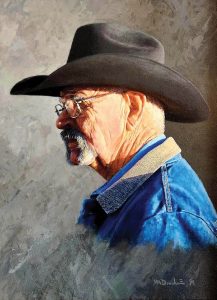
Mikel Donahue, Bill Nebeker | Acrylic | 20 x 16 inches
Then in 1967, Nebeker took a job at what had been Phippen’s Bear Paw Bronze Foundry. There Bill Owen (1942-2013), who joined the CAA in 1973, encouraged Nebeker to become a full-time artist and apply for membership in what historian B. Byron Price calls “one of the most influential artists’ groups in American history,” in his 2015 book The Sons of Charlie Russell: Celebrating Fifty Years of the Cowboy Artists of America.
Nebeker was voted into the CAA in 1978. “It made a big difference in my early career,” he says. “There were only a few major Western galleries, and they sold a lot of artwork. They were going like gangbusters. Now there’s a gallery in every nook and cranny in the world.”
Brandon Bailey, Sitting Bull’s Vision | Oil | 36 x 72 inches
Now the CAA’s longest-serving active member, Nebeker plans to attend the organization’s 60th exhibition and sale October 2–3 at its new location, The Legacy Building at National Western in Denver.
The past five CAA events were held in Oklahoma City, as were the exhibitions from 1966–1972 and 2011–2018. The Phoenix Art Museum hosted from 1973–2010. Fort Worth, Texas, took over from 2019 through last year, with the exception of 2020 when the COVID-19 pandemic canceled the show. “Our hope in Denver is to still offer something for anyone of all ages and backgrounds,” says Brandon Bailey, a Wyoming native living on a ranch near Scottsbluff, Nebraska, who joined the CAA in 2001.
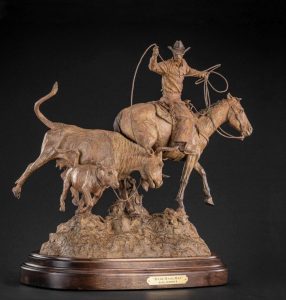
Bill Nebeker, Made Mama Mad | Bronze | 24 x 26 x 16 inches
“The Denver thing is exciting,” adds Dustin Payne, a Cody, Wyoming-based, self-taught sculptor who became a CAA member in 2017. “It’s centrally located, the venue’s outstanding; [it’s] one of the nicest of the Western or cowboy art shows.”
But the CAA isn’t just about selling Western paintings and sculptures. Bailey and Payne are president and vice president of the CAA’s Joe Beeler Foundation, a 501(c)(3) nonprofit that aims to develop and educate artists in the traditions of the CAA. Over the past 10 years, the foundation, named after the CAA cofounder who died in 2006, has awarded more than $250,000 in scholarships.
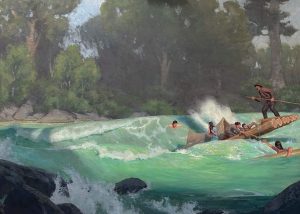
Albin Veselka, How the West Was Won | Oil | 55 x 76 inches
“We both came up through the Joe Beeler Foundation,” Payne says. “We kind of know the importance of it.”
The CAA has cachet, too. “Once you get in the Cowboy Artists of America, all the big collectors want your work,” says Amarillo, Texas-based Jack Sorenson, a full-time artist for 52 years, CAA member since 2021, and one of greeting-card company Leanin’ Tree’s best-selling Western artists. “You’re in demand,” he says.
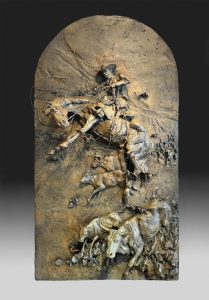
Bruce R. Greene, Flushed | Bronze | 53 x 29 inches
The CAA has 18 active members. Another 13 artists, including sculptor Howard Terpning and painters Tim Cox and Martin Grelle, are emeritus (basically, semi-retired) members, who can attend all CAA functions and exhibit two pieces at the annual show but can’t win CAA show awards.
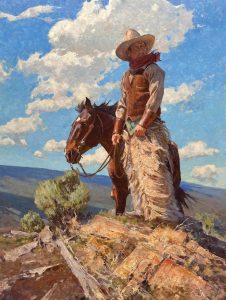
Grant Redden, A Change of Seasons | Oil | 40 x 30 inches
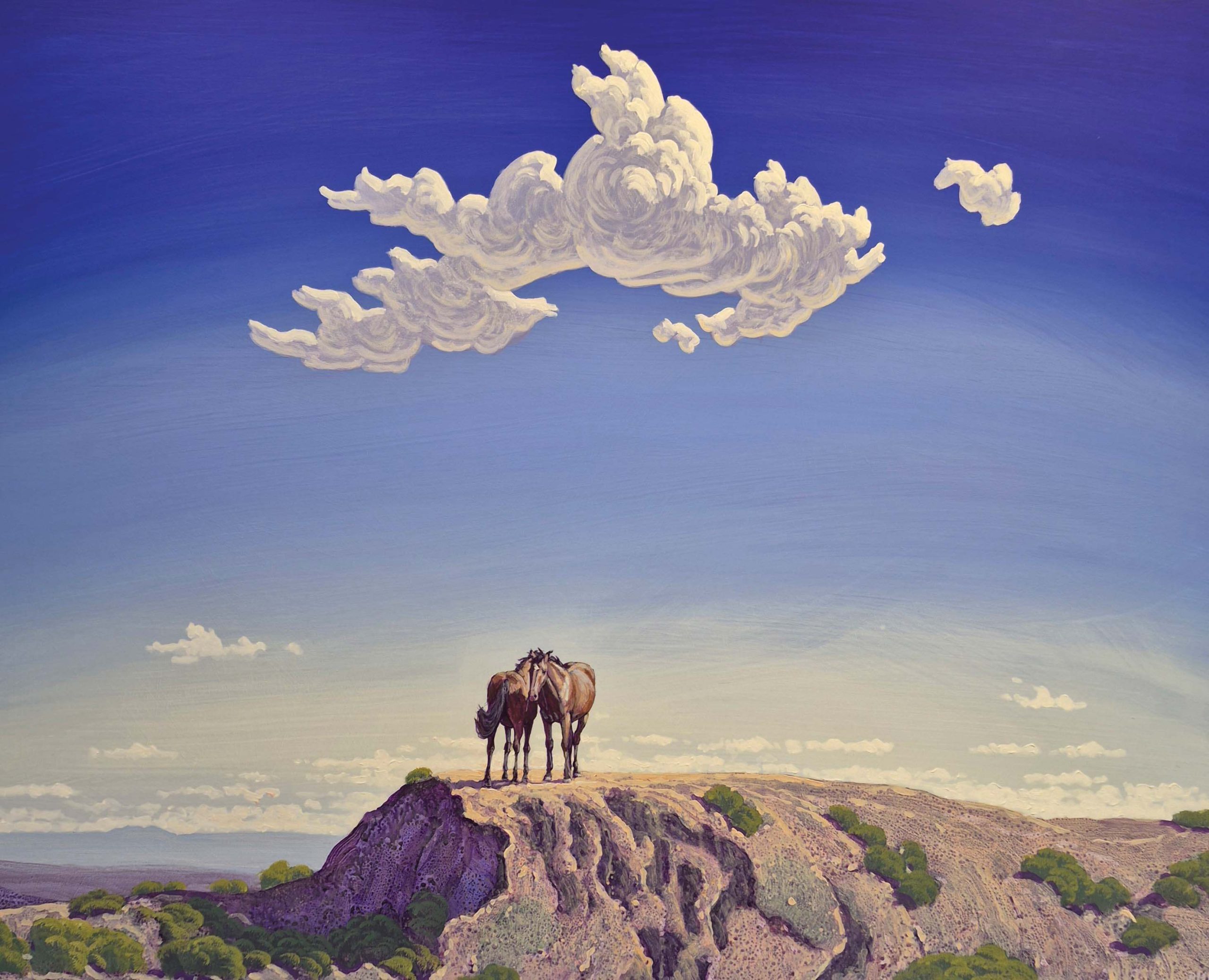
Alvin Marshall, a CAA member since 2023, is a Navajo (Diné) sculptor and painter. In 2016, Hico, Texas-based Tyler Crow became the youngest CAA inductee at age 27. He focuses on contemporary cowboy scenes. Albin Veselka, another 2023 inductee, includes Abram Efimovich Arkhipov and Joaquín Sorolla y Bastida among his inspirations. Newton, Kansas-based painter-sculptor-sketcher Phil Epp blends modernism and realism and is likely known for his clouds as much as his cowboys.
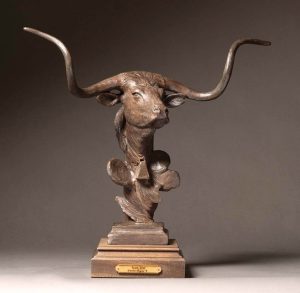
Dustin Payne, Trail Dust | Bronze | 19 x 19 x 10 inches
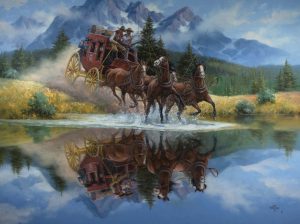
Jack Sorenson, The Fording | Oil on Canvas | 30 x 40 inches
These artists’ work isn’t just paintings of cowboys in yellow rain slickers or bronzes of bucking horses. “There are so many new styles, genres, color pallets, subject matter and eras portrayed,” Nebeker says. “The New West art is contemporary in its subject portrayals, styles, colors and so much more. The more traditional Western art that the early members of the Cowboy Artist of America created still has many admirers and collectors, but the younger audiences seem to be drawn more to the updated styles and artists. Nothing stays the same in life, and art styles will come and go, but good Western art will always be alive and well.”
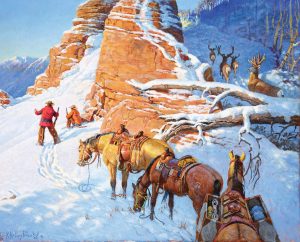
Clark Kelley Price, Be Ready, They’ll Come Through That Notch | Oil | 24 x 30 inches
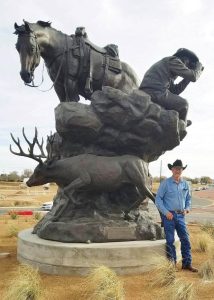
Bill Nebeker, If Horses Could Talk | Bronze | 14 x 10 x 8 feet
There’s something else special about being a CAA member.
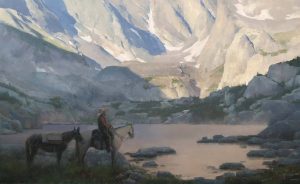
Dave Santillanes, Still Waters | Oil | 36 x 60 inches
“We all get along,” Sorenson says. “I mean … that many egos? That many artist egos? And we all get along?”
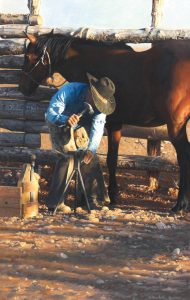
Mikel Donahue, A Day in the Life | Acrylic | 30 x 20 inches
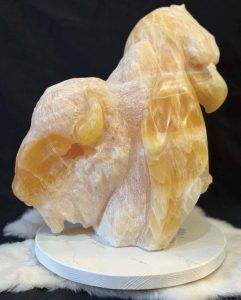
Alvin Marshall, Guardians of the Sun| Alabaster | 13 x 9 x 8 inches
No Comments