


06 Mar Collector’s Notebook: More Beautiful Than It Has to Be
Most art comes with a price tag. But that’s not always the best indicator of whether its value will endure over time. In this issue, we’re looking at the intangible qualities that affect the value of art. We spoke with hyperrealist painter Daniel Sprick, art critic and curator Michael Paglia, and art collector Robert Lewis, to get their take on the qualities that contribute to a work of art’s value and how collectors can learn to spot gems.

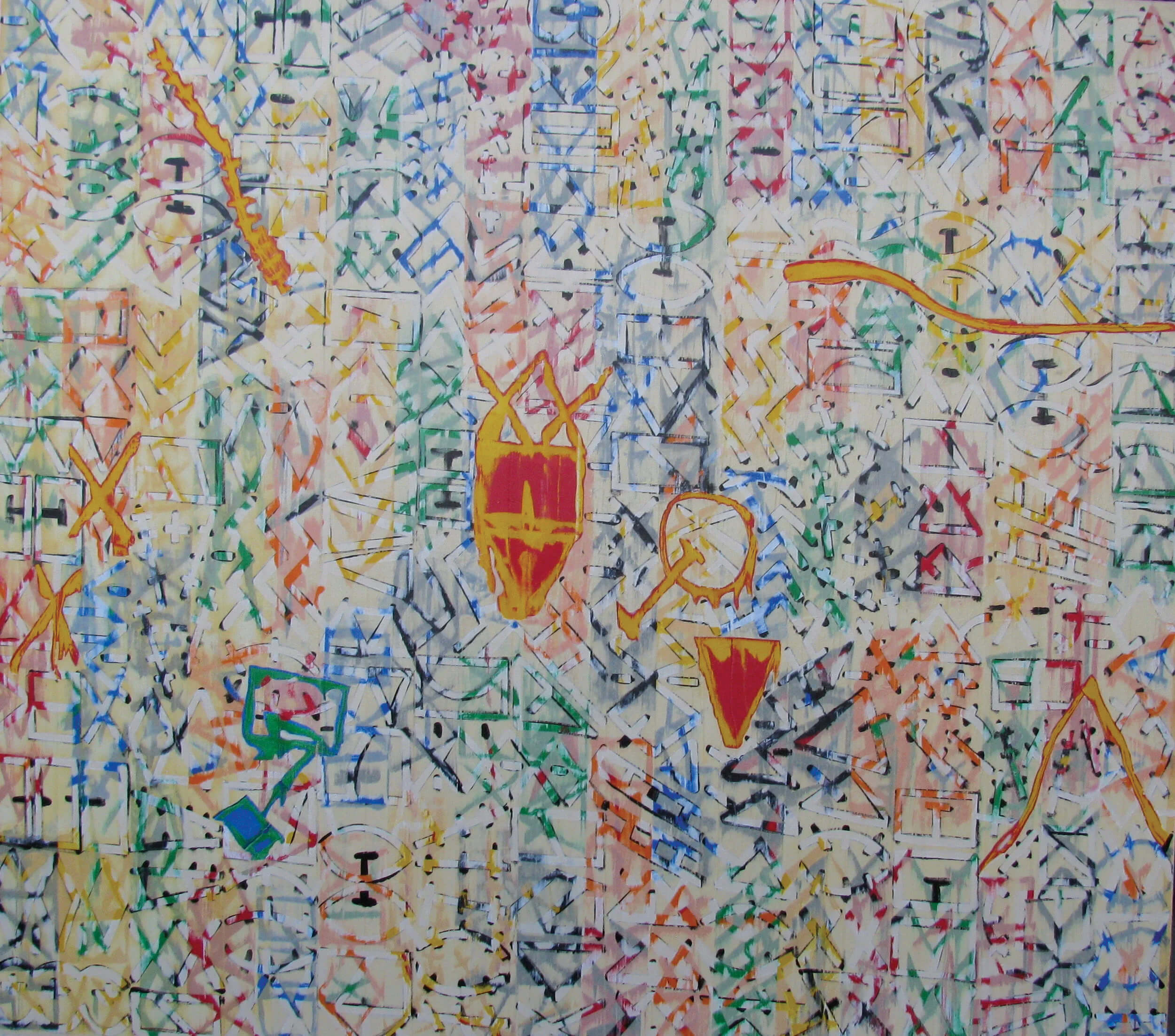
Roland Bernier, Untitled | Acrylic on Paper | 40 x 30 inches | 2002 | Courtesy of Walker Fine Art
Understanding Why
For collector Robert Lewis, making art is mankind’s highest achievement. “It distinguishes us from other species,” he says. “We make art, but it has no utilitarian purpose. You understand food, clothing, and shelter; how do you understand art?”
Determining the value of art, he suggests, is also paradoxical. “In economics, you would say scarcity and supply and demand influence price, but is there scarcity of art? No, it is ubiquitous; there is no scarcity. And there’s great art that is unparalleled, but there’s no market because people are unfamiliar with it, so they have no interest. On the other hand, there are artists whose work is widely available in the marketplace and commands high prices. It’s almost as though, because it’s so common, it’s valuable.”
So, if we don’t need art, and its value doesn’t adhere to normal economics like, say, soybeans, how do we understand its value? Daniel Sprick takes an anthropological view: “It dawned on me that one of the functions of art has to do with fitness signals,” he suggests, meaning survival of the fittest. “Money factors in because it’s fungible and transferable, which makes buying art someone else’s fitness signal. In fact, if something doesn’t cost much, it’s not a very good fitness signal.” But he warns, artists shouldn’t spend time thinking about how collectors will perceive their work.
“I’m trying to make the best painting I can,” he says. “When you are trying to do your best work, no matter what it is, you’re maxed out, and that’s really what’s satisfying about it, as well as frustrating.”
Interestingly, some artists have gone to great lengths to shun the art market. Michael Paglia recalls the artist Roland Bernier, a Colorado pattern painter, for whom Paglia wrote a monograph and a documentary. “He did a body of work called Graffiti,” Paglia says. “Those paintings sold like hot cakes. But Roland said, ‘I must be a sellout if all these people want my work. I’m doing something wrong.’ He completely changed his vision and kept changing until he arrived at his Word pieces, which mostly didn’t sell. Finally, that proved to him that he was doing the right thing; he was not selling out to the man.”
Museums: Keepers of Mankind’s Family Album
In a sense, museums are the gold standard. The first museum known to man dates to the sixth century BCE and the Neo-Babylonian high priestess Ennigaldi, who displayed ancient artifacts along with wall labels, which suggests that preserving history through art and objects is a key to the enduring value of art.
As an artist, Sprick has spent countless hours in museums and says it often feels like communing with spirits. “It’s a shared quest of artists throughout time, this insatiable desire to express themselves visually,” he says.
If museums play a vital role in value, the question becomes: Who makes the decision about what gets in? Let’s face it, as humans, we are fallible. And though we like to believe museum curators have hard-and-fast rules for collecting — and they do — but no matter how insulated one tries to be, popularity is a factor.
“Fame has a lot to do with value, much more than quality,” Sprick says. “A dealer told me that when I was young, and I didn’t want to hear it. But time proved it to be correct. So that’s why good things can be had for very little money, and some terrible things can be had for infinite amounts of money. That’s where connoisseurship comes in and learning to trust your own judgment.”
The conundrum of fame and its effect on value, Paglia adds, has even bigger repercussions. “If things aren’t worth very much,” he says, “they don’t represent anything in this exchange world. And when things aren’t worth very much, they’re also in danger. If we look at the history of art, when there’s a style that no one cares about, and it’s very cheap, that’s when things get thrown away, destroyed, and lost.”
Buy the Best: Skill Versus Artistry
As a collector, Lewis says he’s looking for superlative examples of an artist’s work. “It’s not merely the possession of the object; it’s the pursuit of the object and trying to understand what the next thing is I want to add to my collection. I spend a lot of time talking to artists, critics, curators, and collectors, trying to understand the most important examples of any artist’s work — the quintessential example, which is the piece you recognize from across a room. It’s the most compelling and unique work of art that distinguishes itself from all the others. To get an artist’s quintessential work, you first have to understand what that is.”
Here’s where collectors get turned around because, as Sprick notes, there are many ineffable attributes to art. “My criteria have to do with emotional impact,” he says. “I think skill is a requirement, but some lesser-skilled works can be more transcendent than some highly skilled works. The best bet is to disregard what’s in style; trends come and go. I tell artists not to pay attention to what’s commercially viable; do something that’s true to yourself. If it is meaningful to you, it will most likely be meaningful to others as well.”
Achieving a level of competence is a must for artists, just as it is wise for collectors to understand the qualities that indicate a work of art was crafted by skilled hands. But that’s the baseline.
The next level of discerning value is when an artist originates something new to the art world, in his or her own unique voice. “Like when you hear John Coltrane or Miles Davis,” Lewis says. “You immediately know who it is; they have created their own unique voice. And it’s thrilling to see an artist who, over the course of their career, can reinvent themselves. That level of creativity comes across when you stand before a work of art that is truly incredible. But it requires you to do the work. It will not simply present itself.”
What is Beauty
Many collectors have come to realize over time that what they loved early on no longer holds their attention. They realize that technique can be learned; originality, however, is rare. To understand why one thing is elevated to the level above another, Sprick says he’s developed a simple definition of art and beauty.
“Have you heard of Acheulean handaxes?” he asks. “They’re ancient stone tools, probably from 200,000 years ago, that were made more beautifully than they needed to be. What’s surprising about them is that they show no signs of wear and tear, while others of lesser quality show lots of wear, tear, and breakage — they were meant to be utilitarian. So, my definition of art is making something that’s more beautiful than it has to be. It doesn’t even have to be beautiful; it just has to be better than it needs to be. It could be sweeping the floor better than it really needs to be.”
Paglia echoes this sentiment: “I think it was Henri Focillon who said that we can be sure many of the things we have from antiquity are among the most beautiful because beautiful things tend to be preserved by people, generation after generation. It’s the idea that there is a universal perception of excellence that spans all ages.”
Which is why we are devastated when works such as the Buddhist temples in Afghanistan are destroyed. “And yet,” Sprick says, “those temples have no exchangeable value because they can’t be moved. They cannot be owned by anyone. But it’s shattering to us when they are destroyed.”
Ultimately, Sprick, Lewis, and Paglia agree that understanding value comes down to spending time learning to trust your own judgment and to think for yourself, and not be swayed by what’s fashionable at the time. “I think with most people, there’s an intuition that can be trusted,” Sprick says. “And there’s a surprising consensus about beauty; this is not an original thought of mine. Art needs to be well-crafted — not phenomenally crafted, but it needs to have a certain emotional resonance, and I think that is gathered intuitively.”
When you find those beautiful works, Lewis says, just buy them. “At this stage of life, I’ve begun to realize I’m not going to have a second chance. You know, money, when you die, will be worthless to you. But that experience of living with incredible objects will make your life so much richer.”
Curator and writer Rose Fredrick shares her extensive knowledge about the inner workings of the art market on her blog, The Incurable Optimist, at rosefredrick.com.
No Comments