





30 Apr Western Landmark: Untamed Luxury
Sage Lodge in Montana’s Paradise Valley is one of those rare destinations where place is everything. Set between the craggy Absaroka peaks and the free-flowing Yellowstone River that cuts through the valley, this 50-room lodge on 1,200 idyllic acres is a stone’s throw in either direction from both Yellowstone National Park and the railroad-town-turned-arts-enclave of Livingston, Montana. From every oversized window there are endless views of mountains, river, meadow, sky, and a landscape crisscrossed by grizzly and black bears, elk, deer, coyotes and wolves, eagles and osprey. Talk about winning the geographical lottery.

There are abundant cozy seating areas and nooks in both the main lodge and the four ranch houses on property.

Guided fly-fishing tours and scenic floats on the Yellowstone are some of the lodge’s most requested activities. The concierge team works with guests starting 90 days before arrival to plan the best adventures.
In 2024, Sage Lodge became the first hotel in Montana to earn MICHELIN’s Three Key designation. The designation — which is held by only 143 properties in the world, and was granted to the lodge again in 2025 — is based on comfort and service, style and elegance. For all of its Three Key hotels, the MICHELIN website recommends: “Do whatever you can to get there for a night. It’s one of the most outstanding experiences in the world.”
“It has a lot to do with the location,” says Brad Schuelke, who first moved to the valley 25 years ago and is now the lodge’s director of adventures. “Montana is a special place. The Greater Yellowstone Ecosystem, and Paradise Valley in particular is such a unique place,” he says, referring to the legacy of ranching families in the valley and the strong sense of community that persists even in the era of television shows like “Yellowstone.” “Paradise Valley gives people a chance to see what Montana was and hopefully will still be,” says Schuelke.

The Yellowstone River is considered one of the best freestone blue ribbon trout streams in the world, and the stretch of water through Paradise Valley to Livingston is filled with brown, rainbow, and native Yellowstone cutthroat trout. Photos courtesy of the Sage Lodge
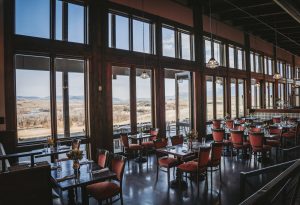
The Grill at Sage Lodge is a contemporary steakhouse with a stunning view over the river and valley.
The lodge itself — a wood, glass, and steel aerie designed by Kurt Jensen of Jensen Design Architects, with interiors by Degen & Degen — is elegant without being ostentatious. The lobby’s cathedral ceiling is held up by a wall of windows that look out over Sage’s private casting pond and to the snow-capped mountains beyond. And cozy but simple guestrooms — 34 in the main lodge and another 16 in four lovely ranch houses that ring the pond — incorporate gas fireplaces, and either a balcony, patio, or window seat.
But time at Sage Lodge is not about staying in your room, inviting as that may be. No, the point is to get outside and get to know the place, says Schuelke. To that end, in his role as Director of Adventures, a title he got to choose himself, Schuelke rattles off a list of amazing activities that Sage offers its guests. Guided fly fishing and Yellowstone Park tours are among the most popular offerings, but the sky has no limit here. From horseback riding and llama trekking to whitewater kayaking, scenic float trips, a river archery course with life-sized targets, mountain bike trails, e-bike tours, and stargazing, Sage offers a panoply of ways to spend those vacation days. There’s no shortage of winter sports, as well as loads of ways to tap into your inner artist, whether culinary, glass-blowing, wood-burning, leather-working, or plein air painting.

Sunrises make getting up early at Sage Lodge worth it.

Horseback riding adventures around the valley and in Yellowstone Park are offered spring, summer, and fall for guests ages 5 and up. Experiences can include cowboy cookouts and fly fishing.
Schuelke says their adventure programming is absolutely integral to the experience of being at Sage Lodge. “People aren’t coming to Montana to sit by the pool,” he says, and adds with a laugh, “We don’t have a pool. They’re coming here to do things. They want to feel like they’ve been to the place.”
And what to do with the time between activities? Fear not. After a major renovation scheduled to conclude this fall, Sage’s luxury spa will focus on herbal fusions, natural botanicals, and seasonal specialties. The Lodge also has two excellent restaurants on property. The Grill at Sage Lodge is a high-end steakhouse specializing in dry-aged steaks and game, small-batch sustainable wines and modern cocktails; while the rustic Fireside Room offers a more casual dining experience, day and night, with a farm-to-table menu, craft cocktails and local beers.
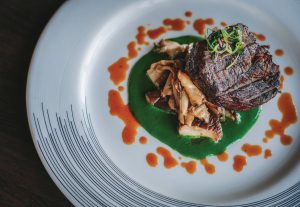
Unforgettable meals at Sage incorporate local meats and produce as often as possible. Photos courtesy of the Sage Lodge

Guestrooms are simple but cozy, and all have a gas fireplace, and a balcony, patio, or window seat.
Though Sage Lodge has the credentials and clout of one of the world’s finest hotels, it also has the authentic feel of a comfortable place where you can show up as you are, try a bunch of new stuff, and kick your feet up at the end of a long, heavenly day. As proof, look around the lobby and you are likely to see some four-legged friends curled up, maybe even snoring, guest dogs and staff dogs alike. Best of all, no one here gives it a second thought. “There are not a lot of Three Key properties where there are dogs sleeping around the lobby during the day,” says Schuelke. Indeed, Sage Lodge is a place that fits both its landscape and its culture.
Writer and editor Carter Walker has lived in southwest Montana for more than 34 years and deeply appreciates the things that make Montana Montana: wild and open country; Native heritage and pioneer history; a shared respect for all our neighbors, human and animal; and the willingness to slow down, appreciate, and take care of what we have.
No Comments