



30 Apr Designing the West: Design That Lets Architecture Speak First
Jaime Rummerfield’s passion for preserving California’s signature architecture informs her award-winning interior design. A revered tastemaker, best known for her work on iconic properties and landmark projects, including the Standard Hotel on Sunset Boulevard, Greystone Mansion, and The Beverly Hills Women’s Club, Rummerfield, the principal and founder of Rummerfield’s, a Los Angeles interior design firm, recognizes that California pioneered great modern architecture. “The 1920s were an incredible time for a myriad of styles of design, from Spanish Revival to the experimental Modernism of Richard Neutra and Rudolph Schindler,” says Rummerfield, with the confidence of an absolute insider.
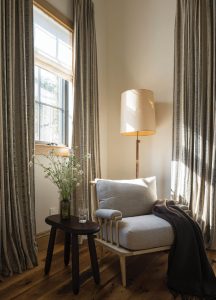
Drapery in Grotto linen by Fabricut softens the primary bedroom; lounge chair by Soho Home.

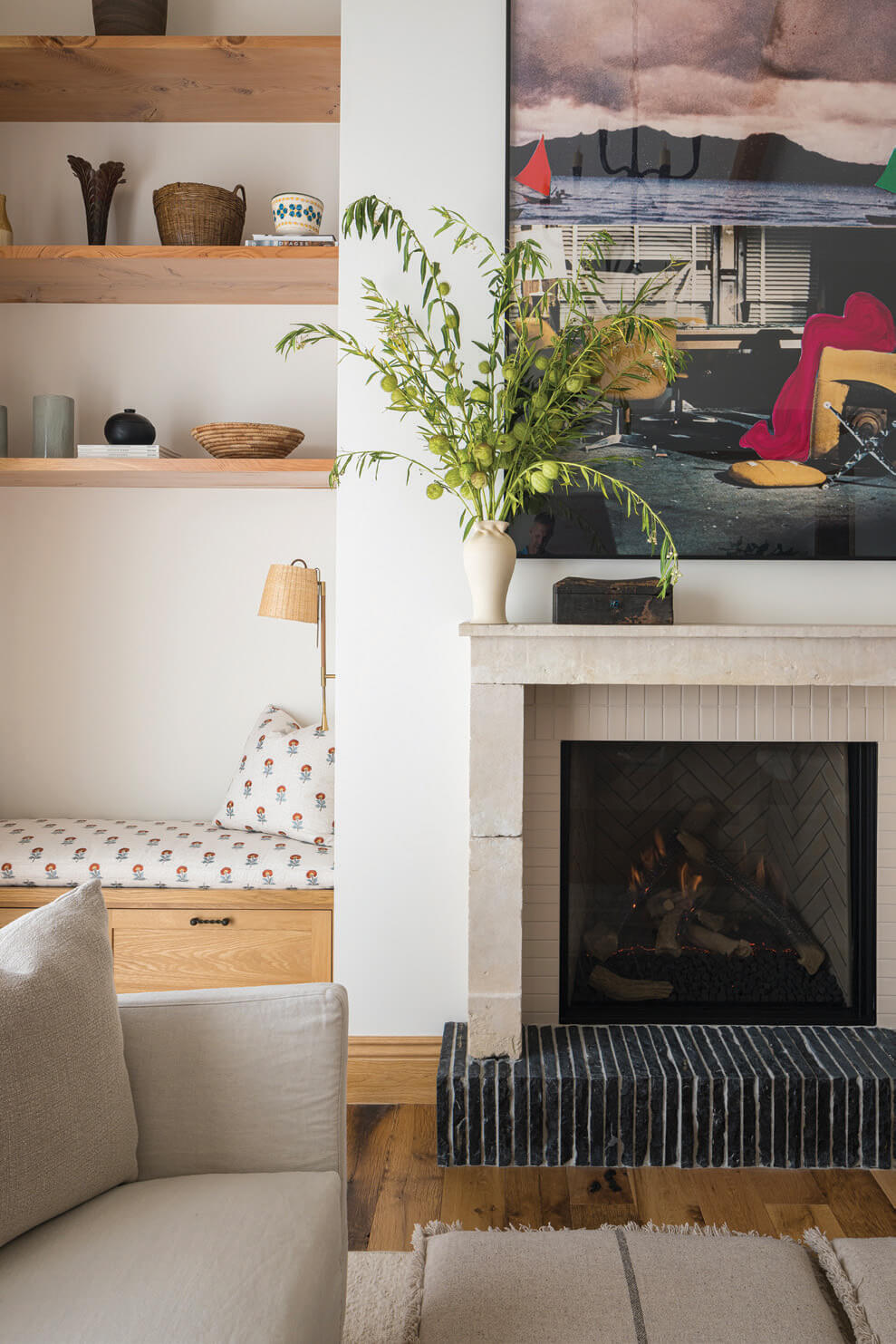
Custom cabinetry rendered in a painted warm neutral, two-tone and white oak uppers with glass fronts, complemented by a café curtain textile from Schumacher within the pantry niche.
“For me, doing interiors for these types of incredible architecture is about context; the architecture always speaks first. You just have to listen,” says Rummerfield. “When you step into a house by someone like Richard Neutra or Donald Wexler, the clarity of the vision is unmistakable; there is a presence, glass, light, landscape, and restraint. Nothing is random. With architects like Myron Hunt, you encounter something more classical and grounded in craft, grandeur, and provenance.”
Rummerfield’s mission is to mold complementary interiors to great architecture, rather than obscuring structures under the weight of heavy detail. “I evaluate and respect the original architectural idea and carry that narrative through, along with comfort and style.” Great design reflects lifestyle and culture, with each element curated with authenticity in mind. “I think of how people lived in the house, making note of the building materials, window lines, flooring transitions, and what the house was meant to be, including whimsical characteristics that make it unique or charming.” Reflecting on her work, Rummerfield divulges that, “Building thoughtful interiors is like telling the story or singing the song of the home. When it’s done authentically, the interiors are an extension and a true complement that brings much joy and light to the home.”
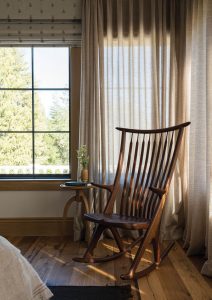
Sculptural rocking chair by BDDW paired with a walnut side table by Jamb; Bee textile by Kravet introduces pattern and tactility.
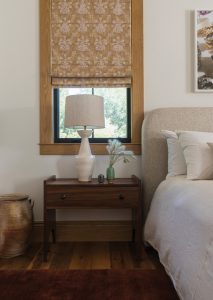
Custom oak side table by Heide Martin; Roman shade textile by Susan Deliss from Nickey Kehoe. Photos: Adam Potts
Rummerfield’s work sits at the intersection of design and preservation. She is the co-founder of Save Iconic Architecture (SIA Projects), an organization dedicated to legendary architecture preservation and education. Rummerfield believes that historic homes should absolutely evolve, but their architectural souls shouldn’t be erased. Maintaining the original bones of a notable house, the authentic materials, the proportions, and the craftsmanship are the elements that give it the most value as a collector’s piece.
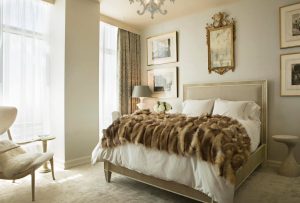
Antique architectural artwork and a neoclassical mirror sourced from Blackman Cruz.
California architecture has always balanced tradition and innovation. Rummerfield acknowledges contemporary improvements must be made, but “the most successful restorations preserve the architectural integrity while allowing modern living to happen naturally inside the space. Good preservation is about maintenance while integrating a home for the modern age, seamlessly.”
Regional identity and heritage inform Rummersfield’s approach to interior design, whether it is for a private home or an iconic landmark. According to Rummerfield, “Los Angeles architecture carries a particular mythology. Los Angeles is one of the most architecturally fascinating cities in the world. In a single neighborhood, you might find Mission Revival estates, Spanish Colonial Revival houses, ranch homes, and Mid-century Modern Case Study houses.” That layering reflects California’s cultural history. Before it became part of the United States in 1848, California was a Mexican territory, and the architectural influence of Spanish and Mexican traditions still defines the region, from courtyards and arcades to tile roofs and thick plaster walls.
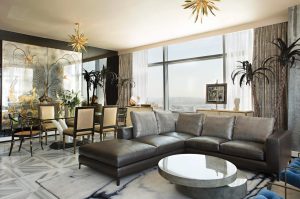
Two-toned leather sectional by Minotti; Starburst fixture by Tony Duquette for Remains Lighting adds sculptural provenance.
“Los Angeles architecture also carries the magnetism of Hollywood’s Golden Age, the glamour, the experimentation, and the optimism of the West. Interiors here celebrate that connection. They should feel rooted in place rather than interchangeable with any other city.” Preserving the opulence of iconic landmarks like Greystone Mansion and the La Collina Estate are at the forefront of Rummersfield’s mission.
Rummerfield extends her work into Napa Valley, 450 miles north of Los Angeles. Recognizing the culture of Northern California is as diverse as it is distant from Los Angeles, there are still classic Californian heritage throughlines across the region.
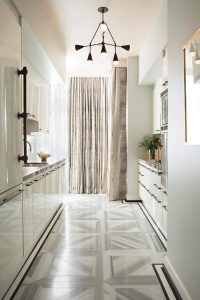
Pendant by Apparatus; oversized cast bronze refrigerator pull by Soane London; drapery in textile by Pierre Frey; wallcovering by Robert Crowder. Photos: Karyn Millet
“What fascinates me is how Los Angeles and Napa represent two sides of the same California identity. One is cinematic and glamorous; the other is pastoral and rooted in agriculture. But both are shaped by landscape, climate, and a long architectural lineage that defines the West,” says Rummerfield.
Napa Valley, known for its signature vineyards, is dotted with stone farmhouses, timber barns, and bodacious estates. While it is more agrarian and deeply connected to the land, Napa has emerged as an affluent destination for second homes and tourist hot spots. The architecture there often reflects Western ranch traditions and bucolic European mansions. Interiors in that environment tend to emphasize craftsmanship, patina, and materials that age gracefully.
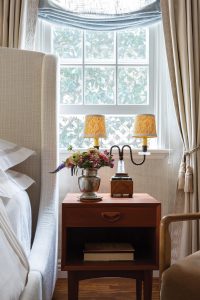
Lounge chair by Lawson-Fenning; linen drapery with passementerie by Samuel & Sons; mid-century walnut end table and antique lighting; custom bedding by Vivre Luxe.
Through her SIA foundation, Rummerfield has become an important advocate for architecture and heritage preservation. As her involvement in the movement deepens, her approach to interior design is evolving from building beautiful homescapes to curating authentic stories of lives and spaces through a historical lens.
“Preservation work changes everything because you realize how fragile architectural heritage actually is. Once it’s lost, it’s gone forever. Extraordinary, legendary buildings disappear all the time, and are often replaced by speculative development that lacks the depth, character, or quality of what came before,” says Rummerfield. “Interior designers have an important role to play in that conversation. We work inside these buildings and can influence how clients value them. It’s important to stand up for what’s right, especially if you know better.”
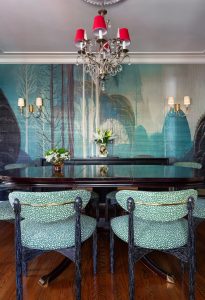
Leto dining chairs by Kimberly Denman; Nouveau mural wallcovering by Arte.
According to Jaime Rummerfield the biggest mistake people make when renovating historic homes is ignoring the architecture and treating the house like a blank canvas. “Historic buildings already have an identity,” she says. “When designers impose unrelated trends or over-renovate original details, the result often feels dissonant and is a complete mistake.”
We asked Rummerfield how to give a vintage house a glow up without committing to a full remodel. Here are her suggestions:
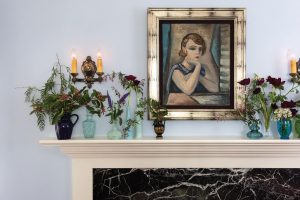
1920s Cubist portrait from a private gallery, set within a giltwood frame; collection of antique blue glass and Murano vessels provides chromatic elegance complimenting the lilac wall color. Photos: Amy Bartlam
When upgrading to modern technology features and fixtures, look for vintage or quality replicas, sourcing from architectural salvage companies for elements like doors, hardware, and lighting that carry authentic patina. But today’s fabrication is so advanced that nearly anything can be reproduced with precision. The balance is knowing when to preserve, restore, or reinterpret.
Windows can be tricky. It’s critical to preserve original proportions and sightlines while improving efficiency. Brands like Marvin Windows offer historically inspired profiles with modern insulation, and custom steel or wood fabricators can replicate original windows to meet current energy standards without compromising the architecture.
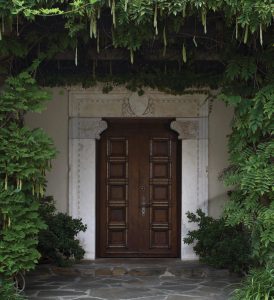
Historic entry sequence featuring original stone moldings, grand carved wood front door by notable architect Gordon Kaufmann, Beverly Hills.
For color, Benjamin Moore Paint offers beautifully researched historic palettes, while Bauwerk creates natural mineral finishes that give walls depth and softness that is more aligned with how older homes were meant to feel.
When it comes to appliances, there’s a renewed focus on classic forms with modern function. SMEG offers a mid-century sensibility, while Kohler produces historically-grounded plumbing collections. In many cases, we also use fully integrated, panel-ready appliances to maintain a seamless architectural expression.
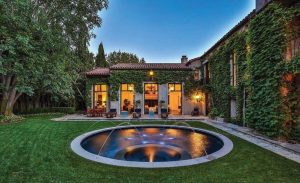
Garden elevation of 1920s Italianate historic residence by architect Gordon Kaufmann, Beverly Hills. Photos: Jonathan Shapiro
Technology should disappear into the architecture. We conceal speakers behind fabric or millwork, integrate Wi-Fi systems discreetly, and design control panels to match the materiality of the home such as bronze, wood, or plaster so nothing feels visually intrusive. It’s about maintaining the integrity of the space while quietly upgrading how it functions.
Award-winning wine and travel writer Simone FM Spinner’s writing has appeared in The SOMM Journal, The Tasting Panel, The Wall Street Journal, Wine Country International Magazine, and other national publications. The Denverbased author wrote Denver Food: A Culinary Evolution, published by The History Press, Arcadia Publishing.
No Comments